A Complete Guide to Flat Roofs and Flat Roofing Options
Discover everything about flat roofs in the UK, including types, materials, costs, installation, maintenance and choosing the right roofing system.
Flat roofing is becoming a popular option for both residential and commercial properties throughout the UK. Its clean appearance, practical design and relatively straightforward construction make it particularly suitable for extensions, garages, new-build properties and modern architectural projects.
Compared with a traditional pitched roof, a flat roof can often require fewer materials and may provide greater flexibility when designing or extending a building. Depending on how the roof is constructed, the surface may also accommodate features such as solar panels, rooftop equipment or green roofing systems.
In this guide, we look at how flat roofs work, their main advantages and disadvantages, the different roofing materials available, typical costs, installation methods and the steps homeowners can take to keep a flat roof in good condition.
What Is a Flat Roof?
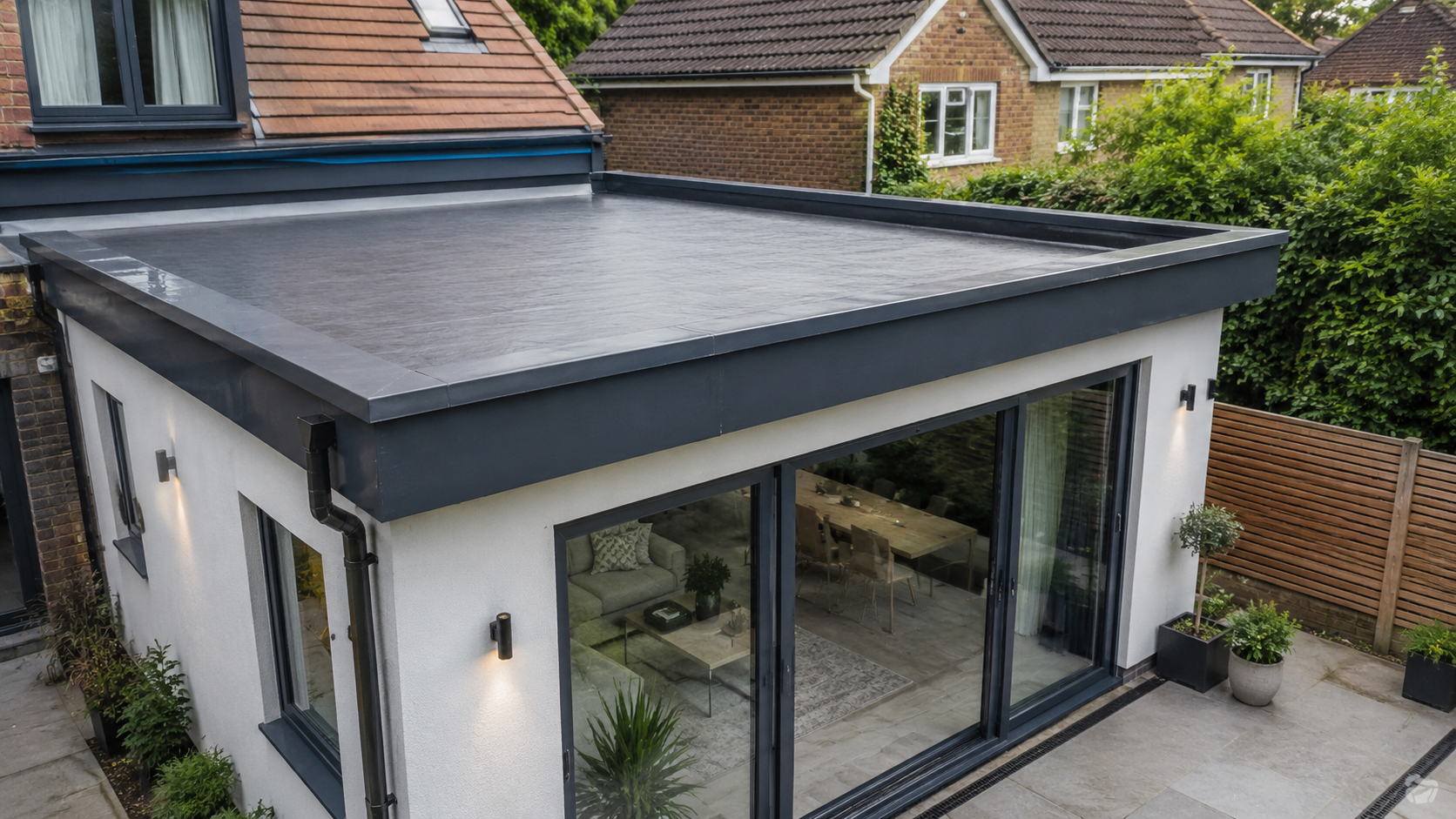
A flat roof is a low-pitched roofing system that appears almost level when viewed from the ground.
Despite its name, a properly constructed flat roof should not be completely horizontal. A slight slope is normally incorporated into the design so that rainwater can move towards gutters, outlets or another suitable drainage point.
This is quite different from a pitched roof, which uses a much steeper angle and usually has a clearly visible ridge.
Flat roofs are frequently chosen for modern residential properties and commercial buildings because their simple profile creates a clean appearance while offering flexibility in the overall building design.
There are two common approaches to flat roof insulation: warm roof construction and cold roof construction.
Warm Deck Flat Roofs
With a warm deck roof, the insulation is installed above the main structural roof deck.
This helps keep the roof structure within the insulated part of the building and can reduce the likelihood of condensation forming within the roofing layers.
Warm roof systems are widely used for modern flat roof projects.
Cold Deck Flat Roofs
A cold deck roof positions the insulation underneath the structural roof deck.
Many older properties contain roofs constructed using this method. Because the roof deck remains colder, ventilation and moisture management are particularly important.
If the system is not properly designed or maintained, condensation can potentially develop within the roof construction.
What Are the Pros and Cons of a Flat Roof?
Flat roofs provide several useful benefits, but homeowners should also understand the potential drawbacks before choosing this type of roofing system.
Advantages of Flat Roofing
Efficient Use of Space
The low-profile design of a flat roof removes the large sloping structure associated with pitched roofing. Depending on the roof design and structural specification, this can provide opportunities for solar panels, green roofing systems or other rooftop equipment.
Convenient Maintenance Access
The lower pitch can make certain inspections and maintenance tasks easier to carry out compared with a steep pitched roof. Professional safety precautions are still required whenever anyone works at height.
Potentially Lower Construction Costs
Flat roofs can sometimes use fewer materials and involve simpler construction than pitched alternatives, which can make them economical for extensions, garages and similar projects.
Versatile Design
Flat roof areas can be adapted to suit many different building types and may accommodate equipment such as ventilation units, satellite equipment or solar installations where the roof has been designed accordingly.
Contemporary Appearance
The clean horizontal lines created by flat roofing are particularly well suited to contemporary architecture and modern home extensions.
Disadvantages of Flat Roofing
Greater Dependence on Drainage
Because the pitch is relatively shallow, water does not naturally move away as quickly as it does on a steep roof.
The roof therefore depends on suitable falls, outlets and guttering. Blocked or poorly designed drainage can result in standing water.
Exposure to Weather
Flat roofs are directly exposed to rainfall, sunlight, frost and other environmental conditions. Areas of persistent standing water or excessive foot traffic may also contribute to deterioration over time.
Insulation Requirements
Correct insulation is important for maintaining energy efficiency and managing condensation. Upgrading the insulation of an older flat roof may add to the overall cost of refurbishment or replacement.
What Are the Most Popular Flat Roof Materials?
Modern flat roofing can be constructed using several different waterproofing materials.
Each system has advantages and disadvantages, so the right choice will depend on the property, available budget, expected lifespan and the roof’s intended use.
1. Glass-Reinforced Plastic (GRP)
Glass-Reinforced Plastic, usually referred to as GRP or fibreglass roofing, combines polyester resin with glass-fibre reinforcement to produce a strong waterproof surface.
GRP creates a clean and relatively seamless finish, which has made it a popular option for domestic flat roofs.
When correctly installed and maintained, a GRP roof may provide approximately 25 to 50 years of service.
Some of the main benefits include:
- Strong and durable finish
- Good resistance to weather
- Minimal routine maintenance
- Attractive contemporary appearance
- Suitable for many residential flat roofs
Correct installation is particularly important because the quality of the roof deck, weather conditions during installation and detailing around edges can all influence the finished roof.
2. Single-Ply Membranes Such as EPDM
EPDM stands for Ethylene Propylene Diene Monomer.
It is a synthetic rubber material commonly used to create flexible waterproof membranes for flat roofs.
EPDM is suitable for both domestic and commercial applications and is valued for its resistance to changing weather conditions and its ability to cover relatively large roof areas.
A professionally fitted EPDM roof may commonly provide around 25 to 40 years of service, depending on the product, installation quality and maintenance.
Its flexibility can also make EPDM useful on roofs that experience movement caused by changes in temperature.
3. Lead Roofing
Lead remains an important roofing material, particularly on period properties, traditional buildings and projects where a premium appearance is required.
One of lead’s greatest advantages is its potential longevity.
When correctly designed, installed and maintained, lead roofing can remain serviceable for many decades and, in suitable circumstances, may last for more than 100 years.
The material also provides a distinctive traditional appearance that can complement heritage buildings.
However, lead is considerably heavier than many modern membrane systems, so the supporting structure must be suitable for the additional weight.
Professional installation is also essential because lead must be detailed correctly to allow for natural expansion and contraction.
4. Flat Roof Felt
Roofing felt remains one of the most familiar and widely used flat roof materials in the UK.
It is especially popular for garages, extensions and outbuildings where homeowners are looking for a practical and relatively affordable roofing solution.
Traditional felt generally has a shorter lifespan than some premium roofing systems, with approximately 15 to 25 years being a common expectation depending on the material and installation.
Modern felt roofing has improved considerably.
Modified bitumen systems, including torch-on felt, use stronger reinforced layers that are bonded together to create a durable waterproof covering.
These modern systems generally provide significantly better performance than simple shed-style roofing felt.
5. Green Roofing Systems
Green roofs, sometimes called living roofs, incorporate vegetation and growing material above a specially designed waterproof membrane.
They are increasingly seen on homes, extensions and commercial properties, particularly where environmental considerations form part of the project.
Potential benefits include:
- Improved appearance
- Additional insulation benefits
- Increased biodiversity
- Rainwater management
- Additional green space in built-up environments
However, a green roof requires a carefully designed waterproofing and drainage system.
Vegetation also needs ongoing maintenance, meaning the overall cost can be higher than a conventional flat roof covering.
What Material Should I Choose for My Flat Roof?
There is no single roofing material that will be the best choice for every property.
Several factors need to be considered before making a decision.
These include:
- Your available budget
- The size of the roof
- Property type
- Desired appearance
- Expected lifespan
- Maintenance requirements
- Existing roof structure
- Accessibility
- How the roof will be used
Lead can provide outstanding longevity and a premium appearance but is typically one of the more expensive solutions.
Felt and modified bitumen systems are usually more economical and can offer excellent value when professionally installed.
GRP and EPDM are popular choices for modern residential properties because they combine durability, practical maintenance requirements and a clean appearance.
Before selecting a material, it is worth having the existing roof assessed by an experienced roofing contractor.
The cheapest initial option is not always the best long-term investment.
How Much Does a Flat Roof Cost?
The price of installing or replacing a flat roof depends on several factors.
Material choice is one of the biggest considerations, but roof size, access, structural condition and project complexity can all influence the final quotation.
As a general indication, flat roof installation can fall within a broad range of approximately £50 to £130 per square metre depending on the roofing system and specification.
Indicative material-based ranges may include:
- GRP: approximately £80 to £120 per m²
- EPDM: approximately £60 to £80 per m²
- Lead: approximately £80 to £130 per m²
- Traditional Felt: approximately £20 to £40 per m²
- Torch-On Felt: approximately £30 to £50 per m²
- Green Roofing: approximately £50 to £100 per m²
These figures should only be used as general guidance.
The actual cost of a flat roof can change according to factors such as:
- Removal of the existing roof
- Replacement roof decking
- Timber repairs
- Insulation upgrades
- Scaffolding
- Roof height
- Accessibility
- New flashing
- Guttering
- Drainage modifications
- Rooflights
- Complex corners or junctions
For an accurate figure, the roof should be inspected and measured before a quotation is prepared.
How Does the Flat Roof Installation Process Work?
Although the exact procedure varies according to the roofing material being used, most professional flat roof installations follow a similar sequence.
1. Inspecting and Preparing the Roof Base
The existing roof structure is inspected to make sure the deck and supporting timber are suitable for the new roofing system. If necessary, the old covering is removed so damaged, rotten or weak areas can be repaired.
A new roof deck may also be installed using suitable boards such as plywood or OSB. The finished surface should be secure, level and ready for waterproofing.
2. Installing Insulation
The next stage involves installing or upgrading the roof insulation.
Many modern flat roofs use a warm roof system, with insulation positioned above the structural deck. Correct insulation improves thermal performance and helps reduce moisture and condensation problems.
The exact specification will depend on the roof design and property requirements.
3. Installing the Waterproof Roofing System
Once the roof is prepared, the selected waterproof covering is installed.
Flat Roof Felt
Felt is usually applied in overlapping layers to create a watertight surface. Modified bitumen systems may use heat to bond the layers securely.
GRP Roofing
GRP uses resin with glass-fibre reinforcement to create a strong waterproof layer, followed by a protective finishing coat.
EPDM and Single-Ply Membranes
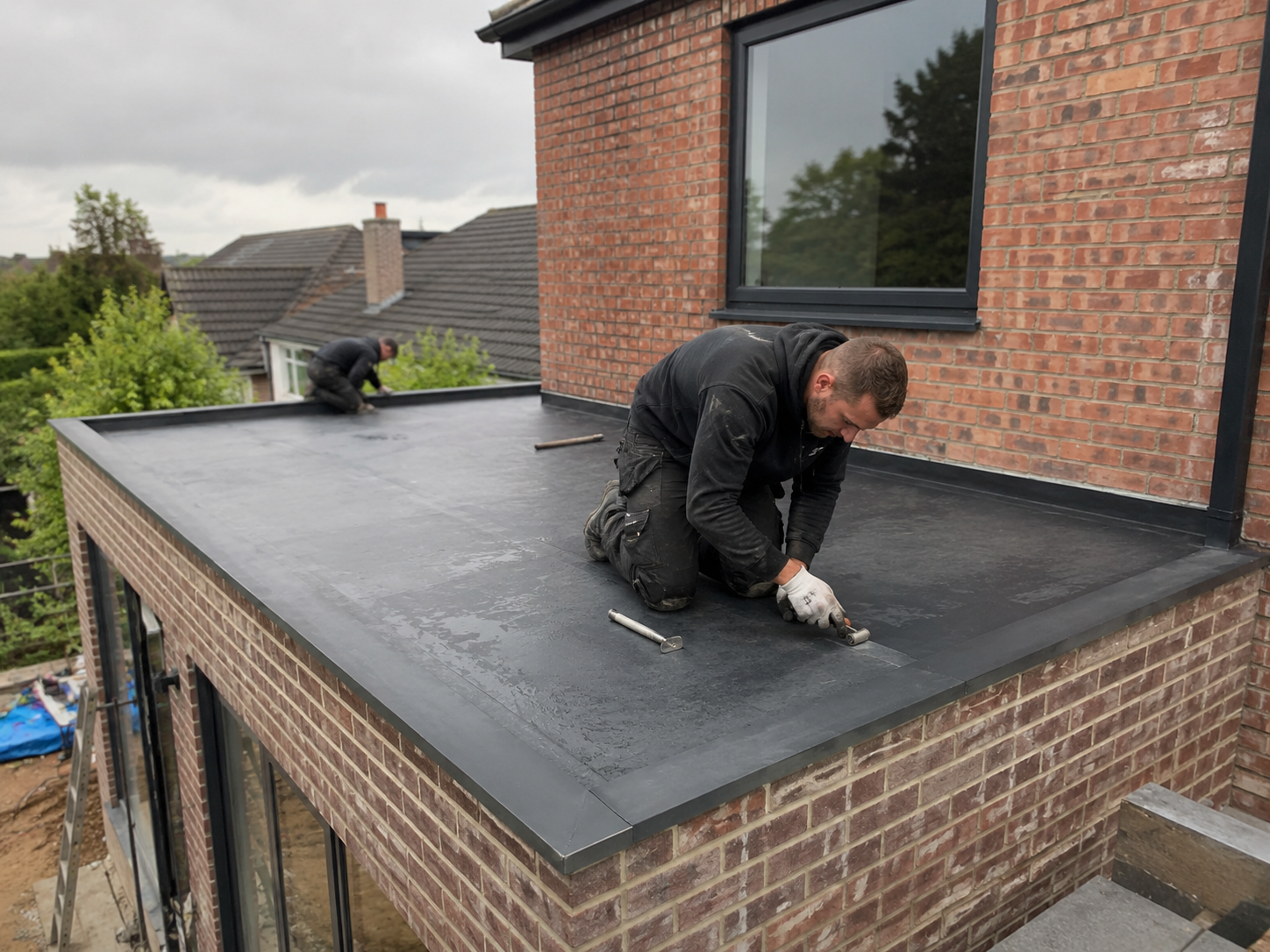
The membrane is rolled across the prepared roof and secured using adhesive or mechanical fixing. Seams, corners and penetrations are carefully sealed.
Lead Roofing
Lead sheets are measured, shaped and installed to suit the roof design, with careful detailing around joints and edges to allow for natural expansion.
4. Installing Flashing and Edge Details
Flashing, trims and edge details are fitted around corners, joints and areas where the roof meets another structure.
These details help prevent water penetration while creating a clean, professional finish.
5. Final Roof Inspection
The completed roof is inspected for:
- Poorly sealed joints
- Drainage problems
- Damaged areas
- Weak detailing
- Incomplete flashing
- Areas where water may collect
The drainage system is also checked to ensure rainwater can flow away from the roof correctly.
Maintenance Tips for Flat Roofing
Regular maintenance can significantly improve the performance of a flat roof and help identify problems before they become expensive repairs.
Inspect the Roof Regularly
Check the roof periodically for visible damage such as cracks, splits, leaks or lifting materials.
An additional inspection can also be useful following severe storms or unusually harsh weather.
Remove Leaves and Debris
Leaves, branches, moss and general dirt can accumulate across the surface and around drainage points.
Removing this material helps prevent outlets and gutters from becoming blocked.
Keep Drainage Systems Clear
Gutters, drains and roof outlets should remain free from obstructions.
Poor drainage can result in water remaining on the roof for prolonged periods.
Address Damage Early
Small defects are normally easier and less expensive to repair than widespread water damage.
If you notice signs of a leak or deterioration, arranging an inspection early can help prevent the problem from spreading into insulation, roof decking or internal ceilings.
Limit Unnecessary Foot Traffic
Unless the flat roof has been specifically designed to function as a terrace or walking area, unnecessary foot traffic should be kept to a minimum.
Repeated walking can damage certain roof coverings.
Monitor Moss and Vegetation
Moss, algae and unwanted vegetation can hold moisture and interfere with drainage.
Keeping the surface reasonably clean can help the roof continue performing as intended.
How Do I Choose the Right Flat Roofing Contractor?
Choose a contractor with proven flat roofing experience, positive customer reviews, suitable insurance and knowledge of systems such as EPDM, felt and GRP. A reliable roofer should provide a clear quotation, explain the recommended material and answer questions about lifespan, maintenance, drainage and installation.
Choose Premier Roofing Oxford
Premier Roofing Oxford provides professional flat roof installations, repairs and replacements throughout Oxford and Oxfordshire. Whether you are dealing with leaks, drainage problems or an ageing roof, our team can assess the condition and recommend a suitable solution.
Looking for a local installer? Our flat roofing team in Oxford fits and repairs felt, EPDM and GRP roofs, and also handles commercial flat roofing for businesses and landlords.